
Life, the Universe, and Restaurants Customer Patience: Tips
Master Life, the Universe, and Restaurants customer patience: serve faster, manage trash bins, harvest brains, and build robots to keep service moving.
Jump to
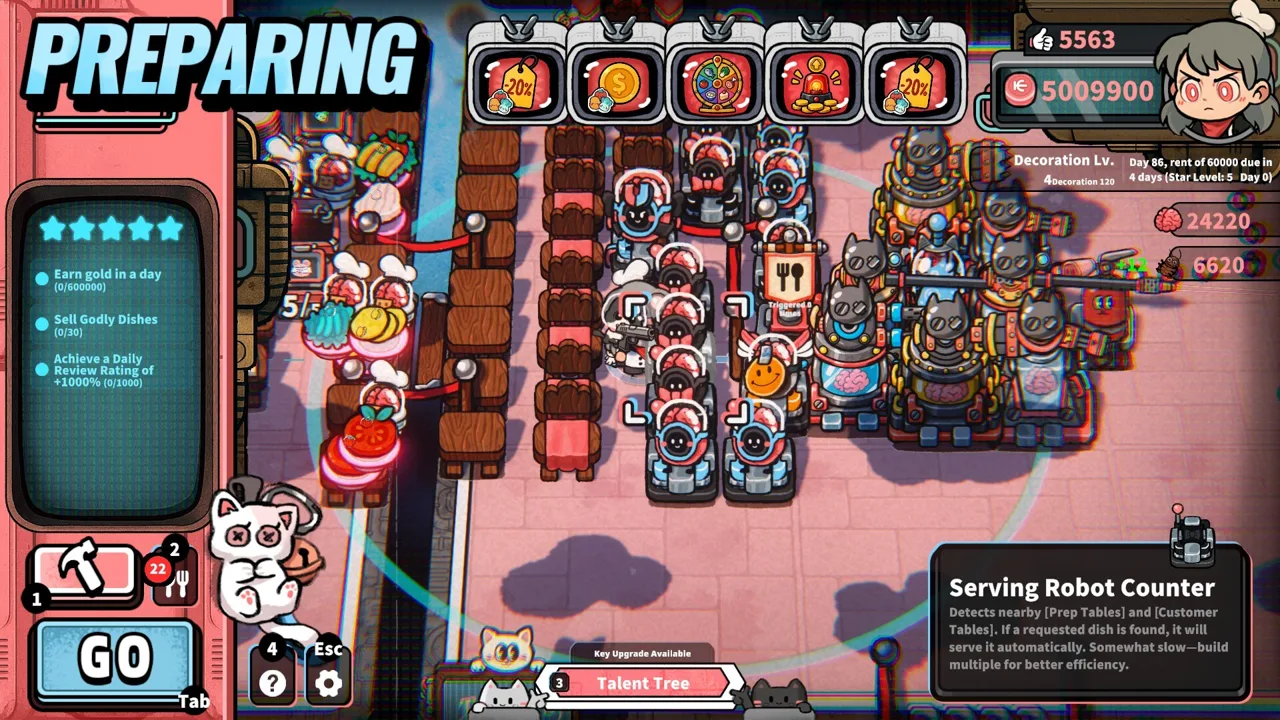
How Customer Patience Changes Your Restaurant
Life, the Universe, and Restaurants customer patience can turn a routine salad order into a fight over your furniture. It matters because satisfied gods bring Coins and Likes, while enraged customers provide the Brains that fuel robot upgrades. Managing Life, the Universe, and Restaurants customer patience means choosing which guests to feed quickly and which to push into a rage.
That choice gives your restaurant two competing demands. You need paying customers to support expansion and rent, but you also need Brains for automation and talents. Keeping everyone happy leaves part of that system unused; provoking everyone puts your dining business under pressure.
Customers arrive through a portal, sit at Customer Tables, and place orders. While they wait, their patience drains. In the demo, a blue bar displays their remaining patience. Once it empties, they become enraged, and angry guests can attack restaurant facilities.
Nearby Trash Bins lower customer patience. Lighting and other methods also affect it, making the dining room itself part of your resource strategy.
| Mechanic | Effect on your restaurant |
|---|---|
| Waiting for food | Customers lose patience while orders remain unfulfilled |
| Nearby Trash Bins | Lower customer patience around affected seating |
| Completely depleted patience | Customers enter a rage |
| Serving customers | Generates Coins and can award Likes |
| Defeating unruly customers | Provides valuable Brains |
Think of Life, the Universe, and Restaurants customer patience as something you manage alongside ingredients and kitchen capacity. Before changing your seating arrangement, decide whether that part of the restaurant should produce meal income or support Brain harvesting.
Keep Paying Customers Moving Through Service
For customers you intend to serve, reduce the time between taking an order and delivering the plated dish. Start with the kitchen route: ingredient container, processing station, plate cabinet, then Customer Table.
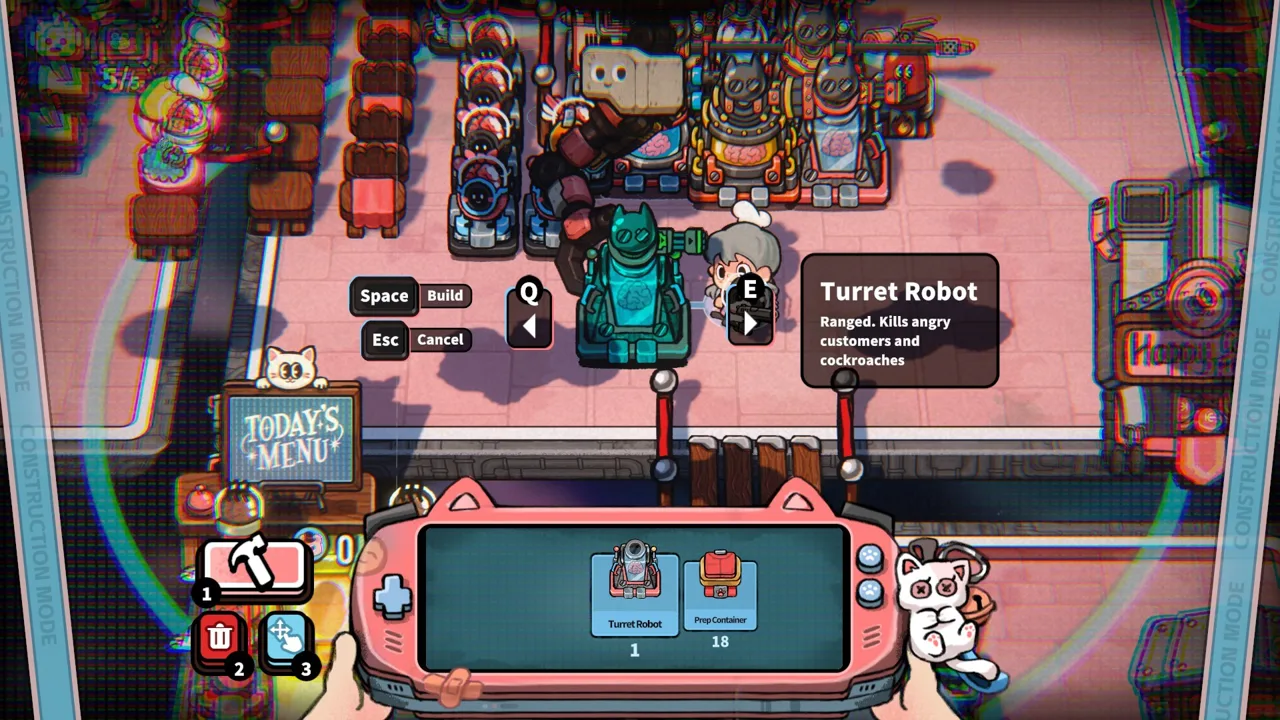 Image: Steam / GARRY
Place equipment in the order you use it. Keep leafy ingredients close to the cutting counter, and keep plates within easy reach of completed food. As recipes introduce other appliances, arrange their ingredient containers beside the relevant processing equipment.
Leave walking gaps around this setup. A compact kitchen still needs room for you and your robots to reach stations without taking long detours.
Fix the Delay Before Adding More Seats
Additional tables increase the number of customers you can accommodate, but each occupied seat adds another order to your workload. Expand production and service capacity alongside seating.
Watch where your routine stalls. If you repeatedly stop to wash plates, address plate availability. If food sits ready while you collect money, shift attention toward transport automation. If one ingredient keeps running out, reconsider promoting dishes that depend on it.
| Service problem | Action to take |
|---|---|
| Long trips between ingredients and equipment | Move containers closer to their processing stations |
| Waiting for clean plates | Add plate cabinets or invest in faster plate washing |
| Completed food waiting for delivery | Clear a direct route to paying customers |
| Coin collection interrupting cooking | Position transport robots near coin drops |
| Advertised dishes exhausting ingredients | Adjust promotions to match available supplies |
Plate cabinets clean plates automatically, and manual washing speeds that process up. Talents can also improve cabinet performance. Use those options when plate shortages repeatedly interrupt orders.
Prep tables hold completed dishes. Prepare a small reserve of food you expect to serve, then keep enough open space for the next batch. Filling every surface with one recipe can leave other orders waiting.
Life, the Universe, and Restaurants customer patience also makes order prioritization important. Among guests you intend to feed, check whose patience is running low and whether their dish is ready. Deliver a completed order before starting another preparation routine when doing so saves a customer from reaching a rage.
Keep checking ingredient availability throughout service. A fast route cannot finish a recipe after its required supplies are gone.
Use Trash Bins to Create a Brain Harvesting Area
Your restaurant has a deliberately strange growth loop: make gods angry, defend your establishment when they become unruly, and collect their Brains. Those Brains support talents and brain-based robots.
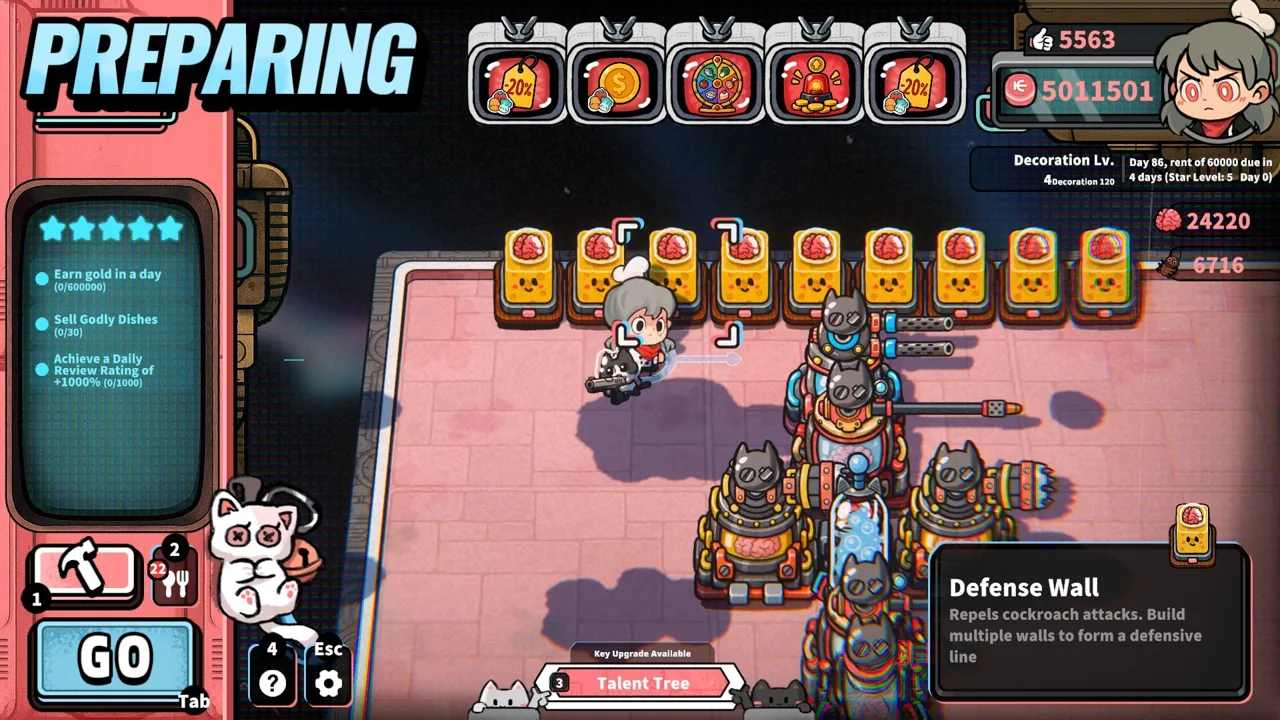 Image: Steam / GARRY
Trash Bins let you influence where that happens. Their proximity lowers customer patience, and additional nearby bins intensify the effect described in the tutorial.
Reserve a distinct seating area for this purpose. Place the bins around the table you want to affect, while keeping your regular dining tables away from their influence. Leave yourself access to the designated area so you can respond when a customer becomes aggressive.
| Area | Placement to consider | Task during service |
|---|---|---|
| Regular dining tables | Away from nearby Trash Bins | Take orders and deliver meals promptly |
| Brain harvesting table | Within the influence of nearby bins | Watch for customers entering a rage |
| Kitchen | Along an efficient ingredient-to-plate route | Maintain food production |
| Coin collection area | Near table coin drops and the vault | Keep collected revenue moving into storage |
In the demo, an early business objective requires building three Trash Bins around one Customer Table. Focus all three on the intended table and check the objective indicator after placement. If it remains incomplete, reposition the arrangement and check again before buying more equipment.
Watch the Transition Into Rage
Wait for the customer to become unruly before treating them as a Brain harvesting target. The game’s self-defense system connects harvesting to enraged customers, who can threaten your facilities.
Once that happens, respond promptly. Leaving an aggressive customer unattended gives them an opportunity to damage the restaurant while you are busy elsewhere.
Life, the Universe, and Restaurants customer patience creates a tradeoff here: the seat used to provoke a customer is also a seat that could support ordinary meal service. Keep enough regular tables operating to maintain income while you gather Brains.
Avoid expanding the harvesting area faster than you can manage it. Cooking, collecting Coins, and handling space roaches already compete for attention. Add another affected table only when you can monitor it without abandoning the rest of service.
Let Robots Take Pressure Off Customer Patience
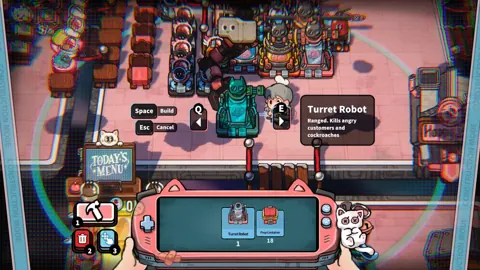
Brains feed into the automation system, which eventually reduces how much work you must handle personally. Robots can take orders, cook, serve dishes, transport Coins, and clean up.
 Image: Steam / GARRY
Start by targeting a task that repeatedly pulls you away from waiting customers. Coin transport is an obvious candidate when money collection keeps interrupting meal preparation.
Transport robot stations have a collection area. Place them where customers drop Coins, keep their travel routes open, and check that they can reach the vault. Money scattered beyond their coverage still needs attention.
Record Cooking Routines With Clear Outputs
Cooking Robots learn by recording your routine and repeating it. Demonstrate the required ingredient collection, preparation, and delivery to the intended output surface.
Keep that routine compact. Put the robot’s ingredient container, appliance, and output area close enough to avoid unnecessary travel, then watch the replay to catch misplaced steps.
| Automation task | Setup detail to check |
|---|---|
| Transporting Coins | Collection coverage includes the relevant drops |
| Repeating a cooking routine | Recorded actions complete the intended recipe |
| Using a shared appliance | Robots can access it without crowding the route |
| Depositing completed food | An output surface remains available |
| Increasing transport speed | The relevant talent receives the required Brains |
Multiple Cooking Robots can work together on increasingly complex recipes. However, assigning more robots to the same appliance does not remove the need to share that station. Arrange their tasks around the equipment they actually use.
Output space matters, too. In the demo, cooking robots wait when there is no open surface for completed food. Serve or move those dishes so production can continue.
Life, the Universe, and Restaurants customer patience remains relevant after automation: customers still wait if your production line has an empty ingredient container, occupied output table, or delayed delivery.
Watch the whole order route instead of only the cooking animation. If dishes are piling up, address serving and storage before adding another Cooking Robot. If robots spend time waiting for equipment, review station placement and shared appliance use.
Automation works toward your service goals when it frees you to handle the tasks that still need attention.
Balance Coins, Likes, and Brains Before Expanding
Your restaurant progresses from one star toward five stars by completing each stage’s business objectives. Higher Star Ratings unlock additional plots, recipes, structures, robots, ads, talents, and management systems.
Keep the current objective list visible in your planning. A purchase that increases daily revenue might still leave a required construction task unfinished. Conversely, building only for objectives can leave your kitchen struggling with the next rush.
Protect Rent Money and Collect Your Earnings
Customers throw Coins onto the floor after being served. Picking them up is only part of collecting your income: you must deliver them to the vault.
In the demo, floor Coins left when the service timer expires are forfeited. Check the remaining service time and help transport robots when money is accumulating faster than they can carry it away.
Before spending on extra tables, appliances, or land, check the upcoming rent amount. Reserve what you need, then use the remaining balance to address the delay costing you service time.
Life, the Universe, and Restaurants customer patience connects those spending decisions. Faster cooking supports paying customers, while Brains unlock automation that helps sustain a larger restaurant.
Promote Food You Can Keep Producing
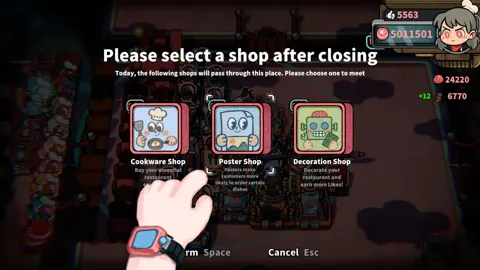
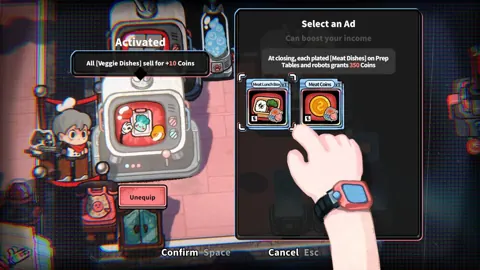
Posters influence customers toward particular dishes, and ads can increase dish profits or shape your business strategy. Match those promotions to your production capacity.
Use these checks before opening:
- Keep paying tables clear of the Trash Bins intended for Brain harvesting.
- Check that advertised recipes have ingredients available.
- Leave output space for Cooking Robots.
- Keep routes to tables and the vault accessible.
- Review rent requirements before making optional purchases.
- Check which business objective your next purchase will advance.
After closing, compare the day’s pressure points. If customers waited while you washed plates, focus on plates. If food production stayed steady but Coins remained scattered, focus on collection. If automation expansion needs Brains, maintain a manageable harvesting area.
Make the next change solve a specific problem in your restaurant. More seats, more robots, and more advertising all create opportunities, but they also add work for the systems already in place.
FAQ
How does Life, the Universe, and Restaurants customer patience work?
Customers lose patience while waiting, and nearby Trash Bins lower it further. Lighting and other methods can also drain patience. When it runs out completely, customers become enraged and can attack restaurant facilities.
How do you get Brains from customers?
Let a customer lose patience and become unruly, then defeat them through the game’s self-defense system. Harvested Brains support talents and brain-based robots. Use a designated table near Trash Bins to concentrate that activity.
Should you put Trash Bins beside every Customer Table?
Keep bins near the tables you intend to use for Brain harvesting. Place ordinary paying tables away from that influence so you have more time to fulfill their orders and maintain meal income.
Can robots handle the entire restaurant workflow?
Robots can take orders, cook, serve, transport Coins, and clean up. Cooking Robots repeat recorded routines. Keep ingredients available, routes accessible, and output surfaces clear so their work can continue.
Continue with
 Life, the Universe, and Restaurants Dish Skill Trees GuideExplore Life, the Universe, and Restaurants dish skill trees, boost dish value, and plan menus, ads, and robot workflows for a more profitable kitchen.
More in Restaurant
Life, the Universe, and Restaurants Coin Collection Guide
Master Life, the Universe, and Restaurants coin collection with vault routes, transport robots, ad strategies, and practical tips to grow daily income.
Life, the Universe, and Restaurants Commercials Guide
Life, the Universe, and Restaurants commercials boost dish income and shape your menu. Learn how to use TVs, posters, and robots to earn more during shifts.
Life, the Universe, and Restaurants Customer Attacks: Guide
Life, the Universe, and Restaurants customer attacks turn angry gods into Brains. Learn patience triggers, defense options, and smarter robot strategies.
Life, the Universe, and Restaurants Earning Likes Guide
Life, the Universe, and Restaurants earning likes guide: learn how dining rewards work, manage customer patience, and work toward your 30-like objective.
Join the community
Official channels for news, updates and player help: