
Life, the Universe, and Restaurants Earning Likes Guide
Life, the Universe, and Restaurants earning likes guide: learn how dining rewards work, manage customer patience, and work toward your 30-like objective.
Jump to
How Earning Likes Works
Your customers call themselves gods, but they still need someone to bring them lunch. Your Life, the Universe, and Restaurants earning likes objective matters because likes appear among the business tasks you tackle on the way to a five-star restaurant. For Life, the Universe, and Restaurants earning likes progress, start with the central mechanic: gods sometimes give you likes after dining.
That word sometimes matters. Serving a meal creates an opportunity to receive a like, but every dish does not come with a guaranteed one. Keep completing orders instead of expecting your likes total to match the number of plates leaving your kitchen.
Coins, likes, and Brains also serve different purposes. Customers drop Coins after being served, while Brains come from dealing with enraged customers through the game's combat system. Keep those activities distinct when deciding what to focus on during a shift.
| Resource | How you receive it | Relevant detail |
|---|---|---|
| Likes | Gods sometimes award them after dining | An early-development objective asks you to earn 30 |
| Coins | Served gods throw them onto the floor | Carry them to the Vault to obtain them |
| Brains | Harvested from unruly customers through combat | Used for talents and more powerful brain-based robots |
The early-development version includes an “Earn likes” task with a target of 30. Its opening service also ends with a daily summary showing eight likes and 80 Coins. Those are results from that particular shift, not a fixed payout or a conversion rate between money and likes.
Use your current task screen to identify the objective you need to complete. Restaurant progression requires completing the business objectives at each stage, so likes are one part of the larger workload.
Build a Service Routine You Can Repeat
The practical focus for Life, the Universe, and Restaurants earning likes is getting customers through their meals. Before chasing elaborate recipes or a crowded dining room, make your basic cooking routine easy to follow.
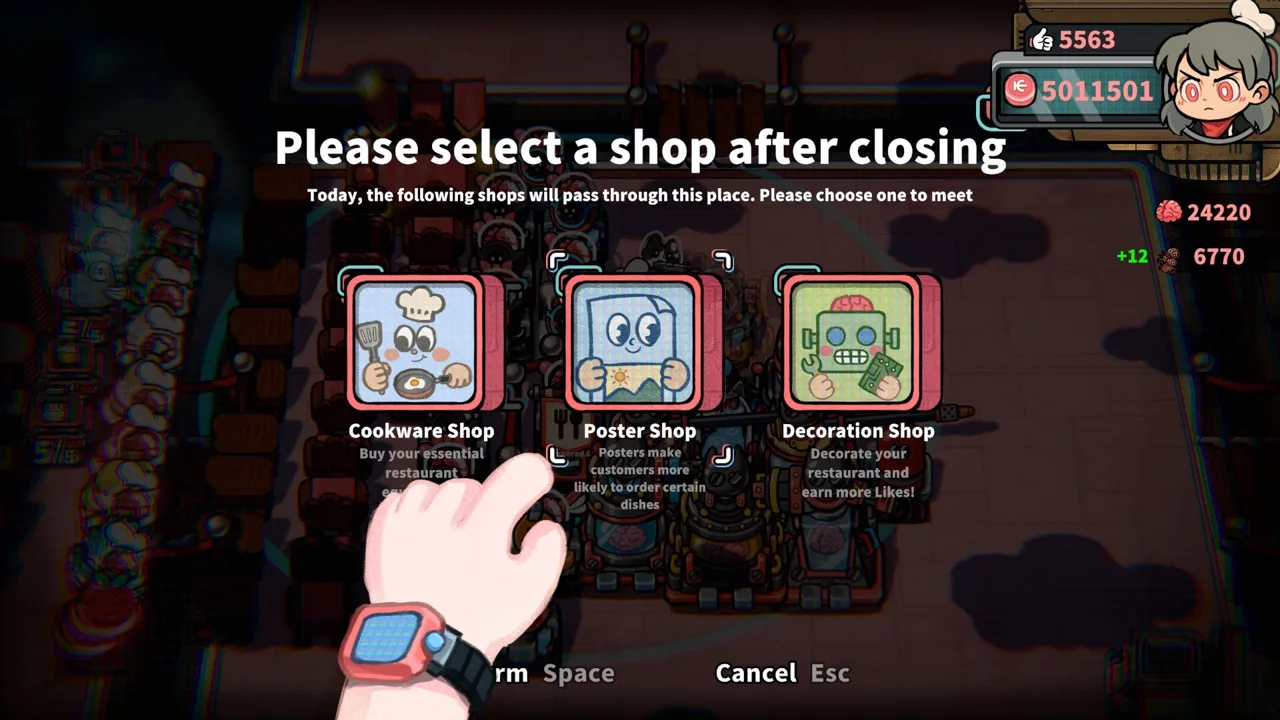
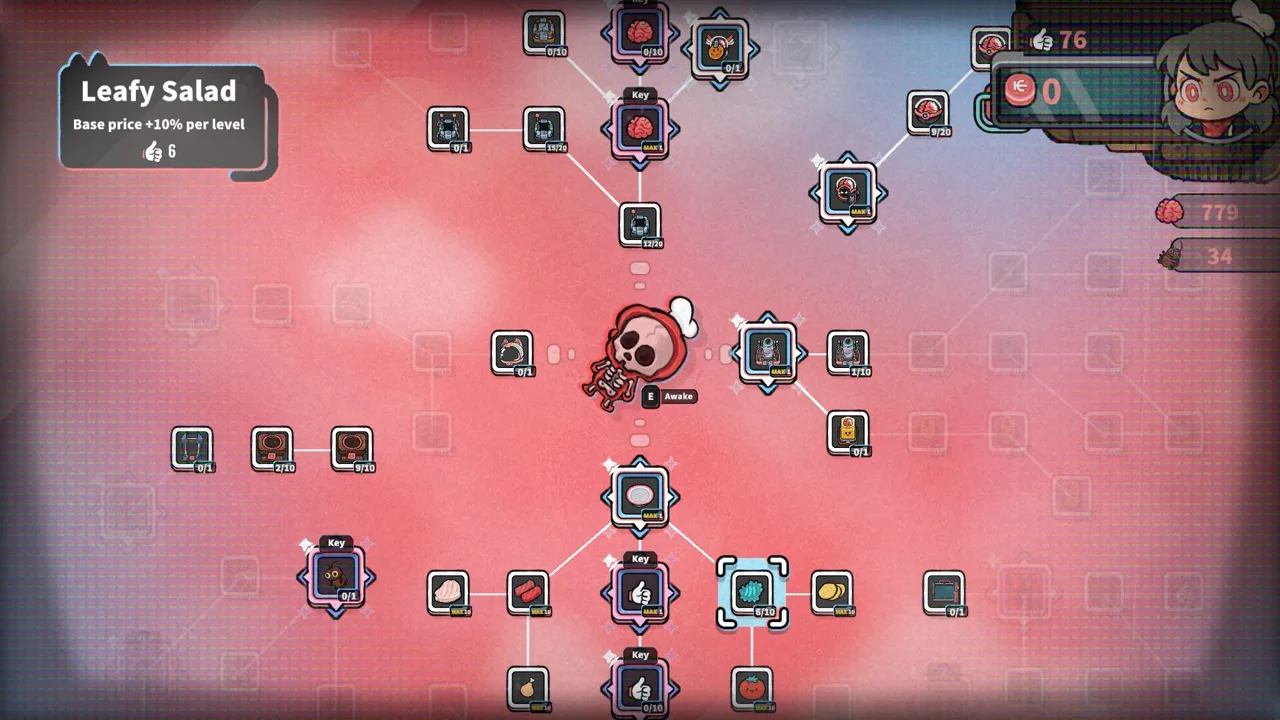 Image: Steam / GARRY
Your manual workload includes taking orders, gathering ingredients, processing food, plating dishes, and delivering them. Each extra trip competes with the attention you need for waiting customers.
Start by arranging the stations used for a recipe into a compact route. Keep ingredient containers accessible from the relevant preparation equipment, then leave a clear path toward your Customer Tables. Avoid scattering your kitchen across the available floor just because you have room.
The opening Leafy Salad recipe gives you a straightforward routine to practice:
| Step | Action | Layout tip |
|---|---|---|
| Take the order | Approach a seated god and take their order | Keep the route to Customer Tables clear |
| Collect the ingredient | Pick up a Leafy Folk from its container | Place the container near the Cutting Counter |
| Prepare it | Slice the Leafy Folk at the Cutting Counter | Leave yourself easy access to the station |
| Plate it | Put the sliced ingredient on a plate | Keep the plating area within a short walk |
| Serve it | Deliver the dish to the customer who ordered it | Check the order display before delivery |
Use the order display when several customers are waiting. A kitchen full of identical salads can still become confusing when you are juggling orders, deliveries, and Coin collection.
Finish a ready dish and deliver it before starting another unnecessary lap through the kitchen. Keep your attention on the customer waiting for that plate, then return to the next order.
Handle money with the same discipline. Walking near dropped Coins collects them onto your back, but you still need to transport them to the Vault. Place the Vault along a convenient route where your layout allows, and combine deposits with trips you already need to make.
Do not turn every dropped Coin into a separate journey while meals are waiting. Keep deposits manageable without letting them dominate service. Coins fund your restaurant, and completed meals create the opportunities for likes.
Manage Customer Patience and Trash Bin Placement
When working on Life, the Universe, and Restaurants earning likes, remember that the game also gives you reasons to upset your guests.
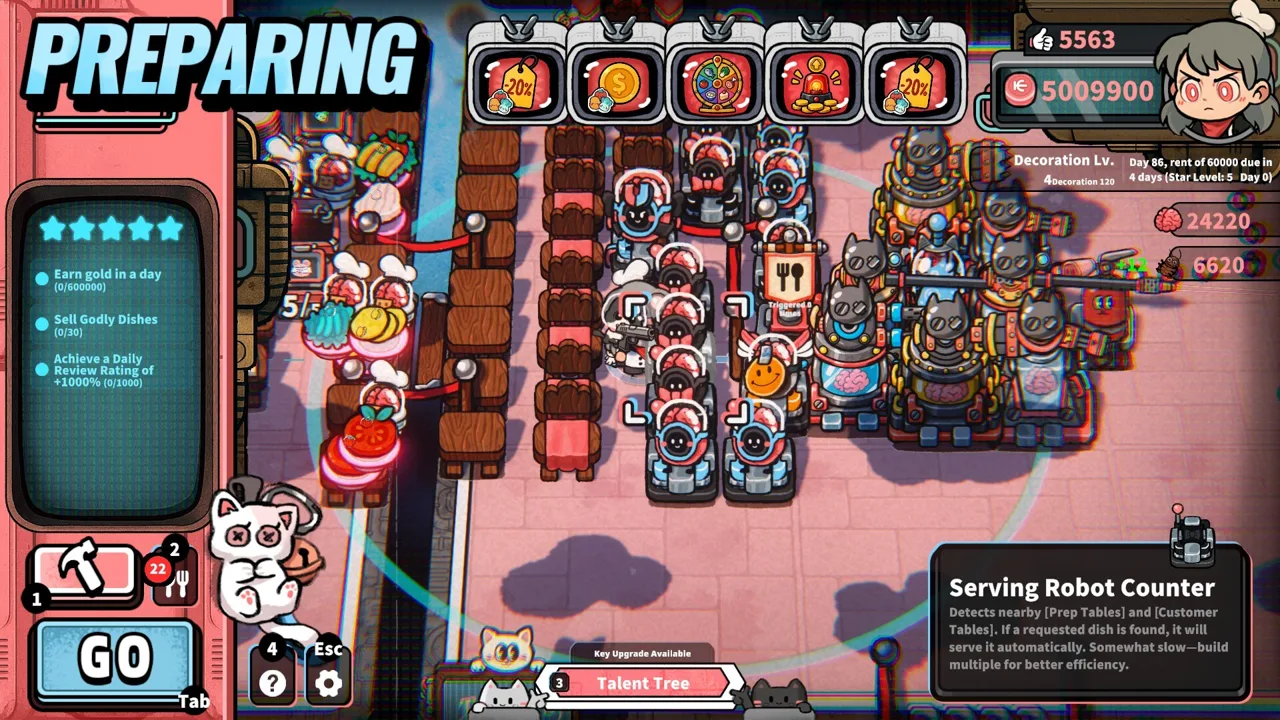 Image: Steam / GARRY
Trash Bins near Customer Tables reduce customer patience. Lighting and other methods can drain it too. When gods lose all patience, they become enraged, creating an opportunity to defend the restaurant and harvest Brains.
That system has a purpose, but it creates a competing demand during meal service. Cooking for customers and handling a furniture-smashing god both need your attention.
The early-development objectives place this tension right in front of you: earning 30 likes appears alongside a task to build three Trash Bins around one Customer Table. Read each task separately. The Trash Bin requirement is a construction objective, while likes arrive after dining.
For your Life, the Universe, and Restaurants earning likes objective, keep patience-draining structures away from the tables you are concentrating on serving whenever your other tasks allow.
| Situation | Relevant mechanic | What to do |
|---|---|---|
| Working toward dining likes | Gods sometimes give likes after meals | Concentrate on completing orders |
| Placing Trash Bins | Nearby bins lower customer patience | Consider their proximity to Customer Tables |
| Completing the early bin objective | The task requires three bins around one table | Check that specific table's placement |
| Collecting Brains | Enraged customers enter the combat system | Prepare for defense alongside your kitchen work |
Avoid spreading the three-bin arrangement across every table simply because one objective requires it around a single table. Keep the requirement focused on its stated location.
Watch the dining room as well as the kitchen. Impatient customers can attack restaurant facilities, turning a cooking problem into a defense problem. Leave yourself room to reach customers and respond rather than packing every open space with equipment.
The larger management challenge is choosing where to spend your attention. When likes are your immediate goal, direct that attention toward customers who are still waiting to eat.
Expand and Automate Around Your Actual Workload
More Customer Tables create more serving work. Before expanding the dining room, check whether you can keep up with the orders already arriving.
 Image: Steam / GARRY
Restaurant growth brings new recipes, structures, robots, plots, ads, talents, and management systems as your Star Rating increases. Higher-tier recipes also involve increasingly complex preparation. Build your production capacity alongside your seating rather than treating tables as an isolated purchase.
For Life, the Universe, and Restaurants earning likes, prioritize the bottleneck interrupting completed meals. If you spend your shift crossing the room, rearrange stations. If Coin transport repeatedly pulls you away from cooking, consider automating that job when the relevant robot becomes available.
Robots can take orders, cook, serve dishes, transport Coins, and clean up. Cooking automation works by recording a routine that robots then repeat. More complex production can involve multiple Cooking Robots working in sequence.
| Repeated workload | Available robot task | Preparation tip |
|---|---|---|
| Returning to seated guests | Taking orders | Keep Customer Tables accessible |
| Repeating ingredient preparation | Cooking | Arrange the stations before recording |
| Carrying finished meals | Serving dishes | Maintain clear delivery routes |
| Making Vault trips | Transporting Coins | Keep the Vault accessible |
| Handling cleanup | Cleaning up | Plan space for the routine |
Rehearse a cooking route before recording it. Gather the correct ingredient, use the required station, and finish the intended preparation without unnecessary detours. Since the robot repeats the recorded routine, spend your setup time making that routine deliberate.
For complicated recipes, plan the handoff between Cooking Robots. Arrange the stations so each part of the sequence connects cleanly to the next.
Keep expansion tied to a specific need. Add production facilities to support a growing workload, then add seating when you are ready to serve it. Spend Coins with upcoming rent in mind; the early-development opening includes a 100-Coin rent payment due in four days.
Keep Your Likes Goal Separate From Profit Strategy
Ads, prices, menu choices, and special events give you several ways to shape restaurant income. Posters make customers more likely to order particular dishes, while TVs steer them toward a selected menu. These tools help you build a business around your recipes and production setup.
Use dish promotion to support a cooking routine your kitchen can handle. Before steering orders toward a recipe, practice its preparation and organize the stations it needs. For an automated menu, record the relevant cooking routines before encouraging more orders.
Keep your Life, the Universe, and Restaurants earning likes plan focused on dining opportunities. A more expensive dish increases the importance of your profit strategy, but it is not a reason to expect a guaranteed like.
During service, work through these priorities:
- Take orders from seated customers.
- Prepare the requested dishes and check who ordered them.
- Deliver finished plates without unnecessary detours.
- Deposit collected Coins in the Vault.
- Watch for patience problems and threats to restaurant facilities.
After service, review your daily gains and business objectives. If likes are progressing while the kitchen feels manageable, continue the routine. If service is becoming frantic, adjust the layout or workload before expanding again.
Use the next shift to address one clear problem. Move a distant ingredient container, shorten a delivery route, or prepare a robot routine for a repeated task. Keep the changes practical enough that you can judge how they affect your workflow.
You can play Life, the Universe, and Restaurants on Steam on Windows. Once you are in the restaurant, check your current objectives and build a kitchen that can keep meals moving while you handle the game's stranger business demands.
FAQ
How does Life, the Universe, and Restaurants earning likes work?
Gods sometimes give you likes after dining. Take their orders, prepare the requested meals, and serve them. Likes are tracked separately from Coins and Brains.
Does every served customer give a like?
No. Likes are occasional dining rewards, so your total does not increase automatically with every meal. Continue completing orders rather than counting each delivered plate as a guaranteed like.
How many likes does the early objective require?
The early-development opening includes an objective to earn 30 likes. Check your current business task screen for the target attached to your restaurant's stage.
Do Trash Bins help you earn likes?
Trash Bins near Customer Tables reduce patience. Use them deliberately for the objectives and anger mechanics that need them, and keep their placement separate from the tables you are focusing on serving.
Continue with
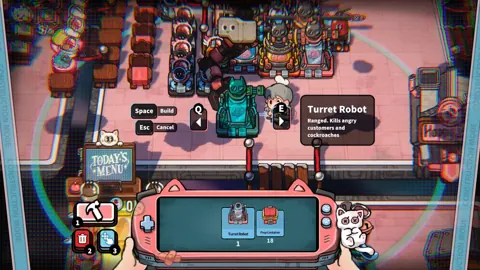 Life, the Universe, and Restaurants Plating: Fast ServiceMaster Life, the Universe, and Restaurants plating with salad steps, kitchen layout tips, and robot routines. Keep dishes moving and serve hungry gods.
More in Restaurant
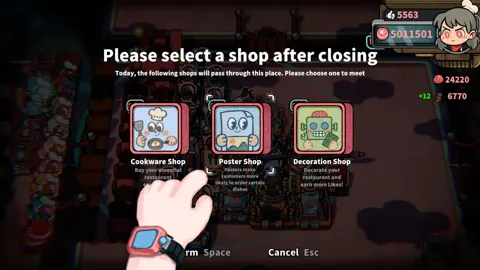
Life, the Universe, and Restaurants Coin Collection Guide
Master Life, the Universe, and Restaurants coin collection with vault routes, transport robots, ad strategies, and practical tips to grow daily income.
Life, the Universe, and Restaurants Commercials Guide
Life, the Universe, and Restaurants commercials boost dish income and shape your menu. Learn how to use TVs, posters, and robots to earn more during shifts.
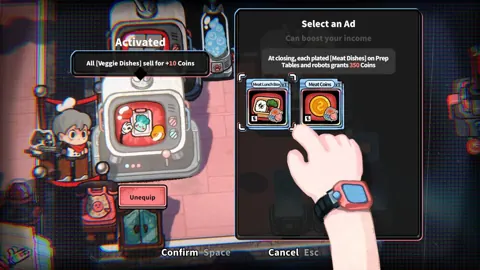
Life, the Universe, and Restaurants Customer Attacks: Guide
Life, the Universe, and Restaurants customer attacks turn angry gods into Brains. Learn patience triggers, defense options, and smarter robot strategies.
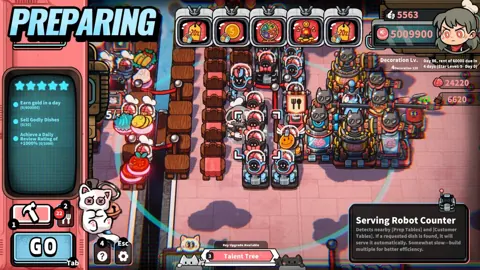
Life, the Universe, and Restaurants Customer Patience: Tips
Master Life, the Universe, and Restaurants customer patience: serve faster, manage trash bins, harvest brains, and build robots to keep service moving.
Join the community
Official channels for news, updates and player help: