
Life, the Universe, and Restaurants FAQ: Starter Guide
This Life, the Universe, and Restaurants FAQ covers robots, brains, star upgrades, and PC requirements. Learn how to manage your kitchen and collect coins.
Jump to
What Is Life, the Universe, and Restaurants?
Your customers call themselves gods, but their brains can end up powering your kitchen staff. This Life, the Universe, and Restaurants FAQ explains how cooking, automation, and restaurant upgrades fit together so you can keep business moving. Use the Life, the Universe, and Restaurants FAQ to plan your layout, understand your resources, and avoid spending an entire shift chasing loose change.
Life, the Universe, and Restaurants combines restaurant management, base building, and automation in a bizarre space setting. You start by handling food preparation and service yourself, then develop robot routines that take over repetitive work.
The full Windows game released on October 12, 2026. It includes the complete progression to a five-star restaurant and the ending story, plus expanded recipes, structures, robots, ads, and talents.
| Game detail | What to know |
|---|---|
| Developer | GARRY |
| Publisher | Gamersky Games |
| Release date | October 12, 2026 |
| Platform | Windows PC through Steam |
| Player mode | Single-player |
| Main objective | Complete business objectives and reach a five-star restaurant |
The cute presentation comes with dark humor and violence. Impatient customers can become aggressive, and harvesting their brains is part of the restaurant economy.
Expect your attention to shift between cooking, collecting income, managing equipment, and defending the premises. Robots gradually give you more room to handle those competing demands, but building an efficient operation still requires planning.
How Do Cooking, Service, and Coins Work?
The cooking loop starts when a customer arrives through the portal and sits at a table. Take the order, gather the required ingredients, process them with the appropriate equipment, plate the dish, and deliver it.
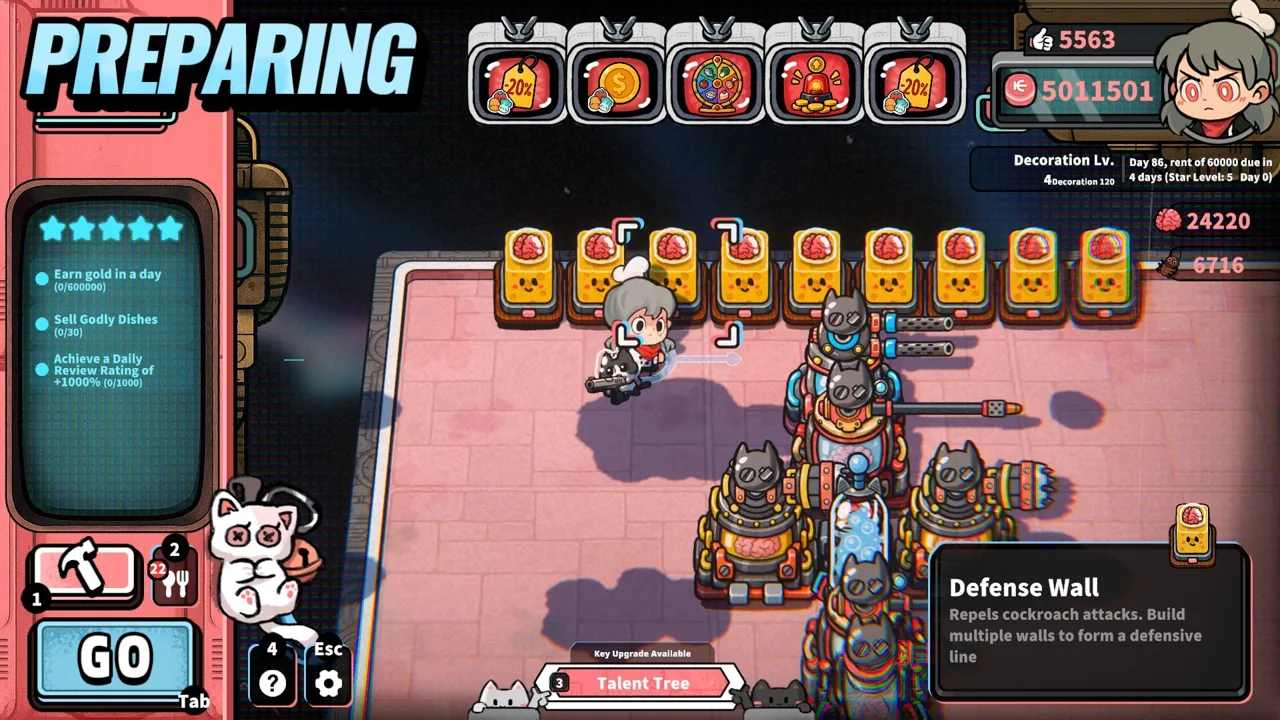 Image: Steam / GARRY
Early recipes include leafy salad and potato salad. More advanced recipes introduce additional preparation steps and appliances, making the distance between stations increasingly important.
Keep this Life, the Universe, and Restaurants FAQ principle in mind: consider the entire trip from ingredient storage to the customer, including the return journey for plates and payment.
Arrange Your Kitchen Around Repeated Tasks
Follow this layout tip from the Life, the Universe, and Restaurants faq: place ingredient containers near the equipment that processes them. Keep plates within easy reach of your preparation area, and leave clear paths to customer tables.
Prep tables provide space for completed dishes. Use that space to prepare food before a rush, especially when your menu favors a particular recipe. Avoid filling every surface with one dish if customers are still ordering several different meals.
| Part of the service loop | Your task | Layout tip |
|---|---|---|
| Ordering | Approach seated customers and take their orders | Keep tables accessible |
| Preparation | Gather and process ingredients | Place related stations close together |
| Plating | Put prepared food on plates | Keep plate storage near the work area |
| Delivery | Bring dishes to customers | Leave a clear route out of the kitchen |
| Coin handling | Collect payment and transport it to the vault | Keep the vault convenient to the dining area |
Why Does Collecting Coins Matter?
In the prelaunch demo, serving a meal dropped coins onto the floor. Walking near them collected them onto your character, but you had to transport them to the vault to secure the income. Coins left on the floor when service ended were forfeited.
That demo also included coin-carrying limits and transport robots that helped gather payment.
Build your layout with collection trips in mind. If tables are producing coins faster than a transport robot can retrieve them, help with collection rather than leaving everything until closing.
Watch your ingredients, too. Customers can request additional servings, and an enthusiastic diner can consume more stock than a single initial order suggests. Match your advertising and preparation to the ingredients you can actually supply.
How Do You Get Brains and Automate the Kitchen?
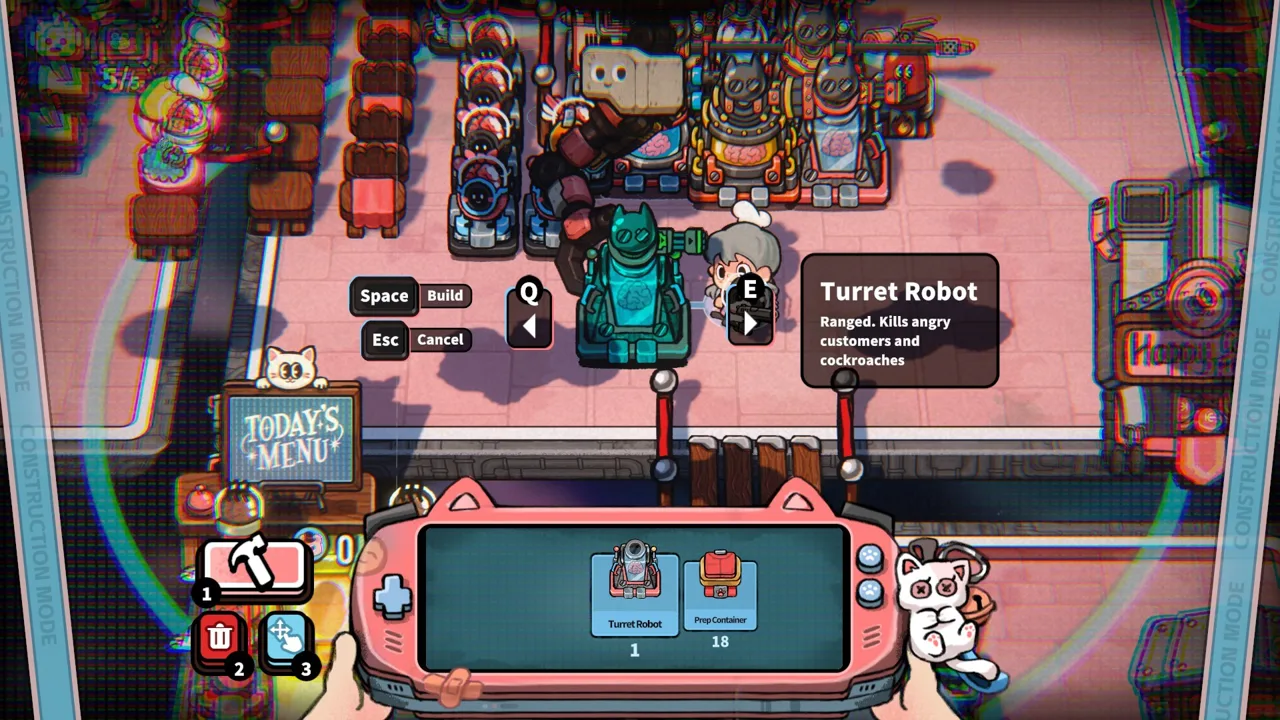
Brains are a resource used for talents and brain-based robots. The game's unusual route to obtaining them involves customers who lose patience and become hostile.
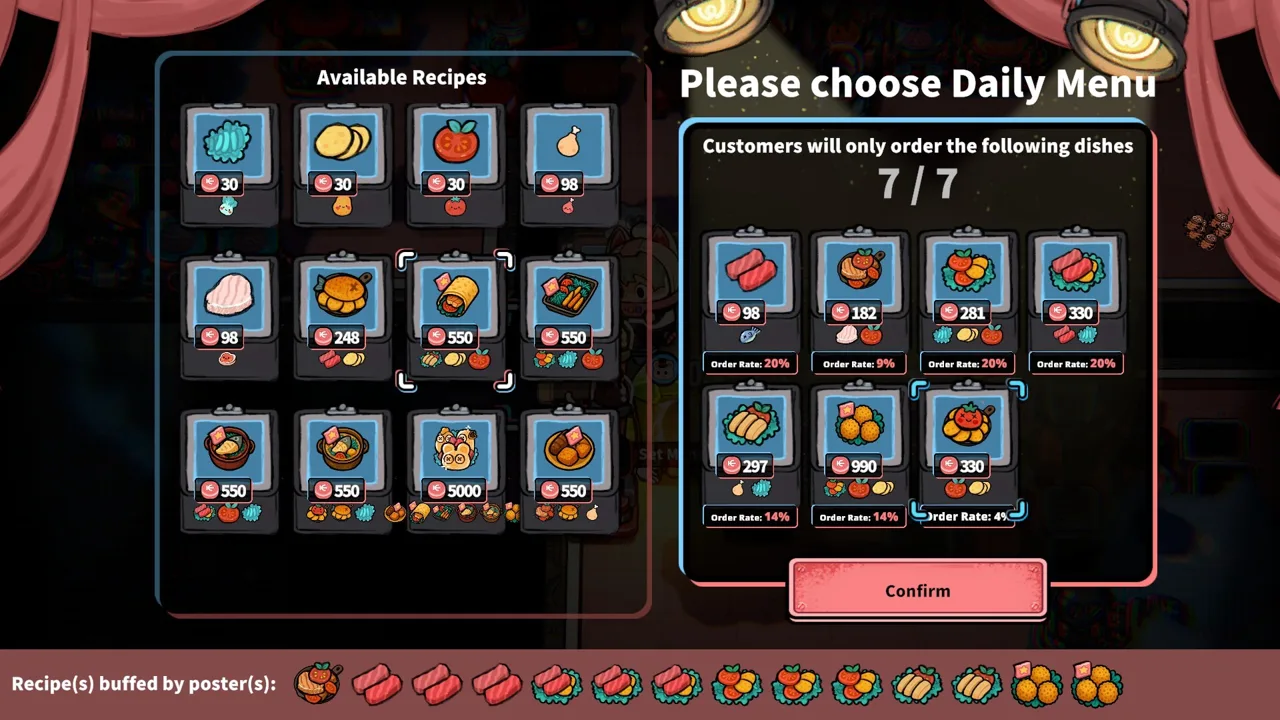 Image: Steam / GARRY
Trash bins, lighting, and other methods can drain customer patience. Once patience runs out, customers fly into a rage. The game's Cosmic Regulatory Bureau permits killing those unruly customers under its fictional self-defense rules and harvesting their brains.
Hostile customers can attack furniture, so deliberately provoking them adds another task to your shift. Keep access to those tables clear, and prepare to respond before turning an entire dining area into a source of brains.
This Life, the Universe, and Restaurants FAQ separates two useful automation jobs: moving income and producing food. Solve whichever task is currently consuming your attention before adding more customer capacity.
| Robot function | Work it can handle | What to plan around |
|---|---|---|
| Taking orders | Handling customer orders | Access to occupied tables |
| Cooking | Repeating recorded preparation routines | Ingredient, appliance, and output placement |
| Serving | Delivering completed dishes | Routes between food and customers |
| Coin transport | Moving coins | Collection coverage and access to the vault |
| Cleanup | Cleaning work | Access to the areas being serviced |
| Defense | Protecting the restaurant with guards or turret robots | Threats near restaurant facilities |
How Does Robot Recording Work?
Cooking automation uses recorded actions. Perform a cooking routine, and a robot repeats it. As recipes become more complicated, multiple cooking robots can work in sequence to form a production line.
Prepare the workspace before recording. Put ingredients, appliances, plates, and the destination surface where you intend to use them. Remove unnecessary walking from the routine.
Start with a manageable sequence, then check its full cycle. Pay attention to where the finished food goes and whether another robot needs the same appliance.
In the prelaunch demo, cooking robots waited when their destination had no open space. Two robots also had to share equipment when their routines used the same appliance.
Leave room for output and collect completed dishes promptly. When a shared station slows production, rearrange the workflow or add equipment as your resources allow.
Robot speed also matters. The prelaunch demo included transport robot movement upgrades and cooking robot work-speed improvements. Balance spending on additional staff with improving the workers already handling your busiest tasks.
How Do Stars, Ads, and Talents Affect Progression?
Your restaurant advances from one star to five stars by completing the business objectives for each stage. Increasing the star rating opens access to more plots, recipes, structures, robots, ads, talents, and management systems.
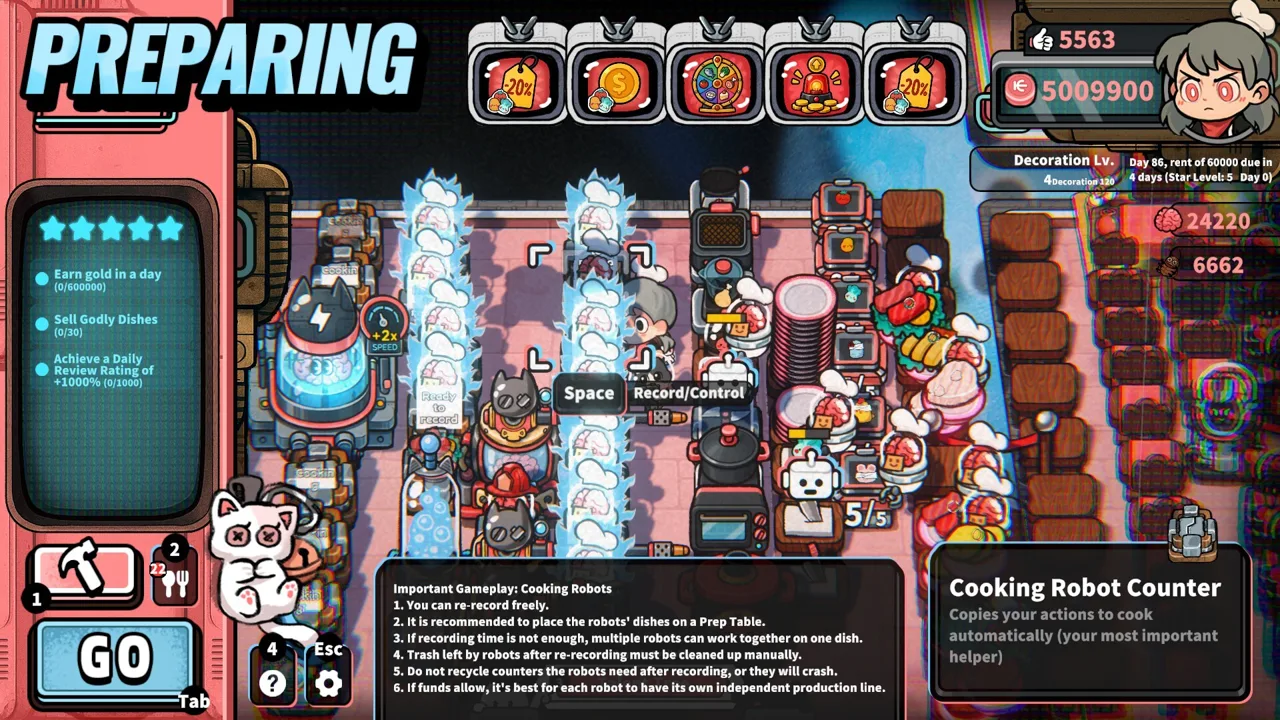 Image: Steam / GARRY
Read the current objective list before shopping. More furniture alone does not complete every upgrade requirement, and spending resources without checking your next goals can leave you short of a required purchase.
The management side of this Life, the Universe, and Restaurants FAQ is about making your menu, equipment, and upgrades support the same plan.
What Did the Early Star Upgrade Require?
The prelaunch demo's early upgrade checklist included earning likes, collecting coins, placing three trash bins around one customer table, building transport robot stations, and running an ad on a large TV.
After completing the checklist, the restaurant phone handled the upgrade request.
Use your current game's objective panel when planning purchases. For placement objectives, check the displayed progress after arranging the structures. If the trash-bin objective remains incomplete, adjust the bins closer around the same table and check again before buying more.
What Is the Difference Between Ads and Posters?
Ads can increase profits from particular dishes or change the way your business operates. Posters make customers more likely to order selected dishes, while TVs help steer orders toward a chosen menu.
Coordinate those systems with your production capacity. Promote a dish your kitchen can make efficiently, then keep ingredients and finished portions available for the demand you are encouraging.
If you are specializing in vegetable dishes, build your preparation area and automation around that menu. If you rotate your menu, review the equipment and ingredients needed before service.
Avoid attracting more customers while your existing orders are already backing up. In the prelaunch demo, flyers increased customer arrivals, creating more opportunities for income but also more work.
Where Should You Spend Resources?
Talents can improve dish value and restaurant abilities. Brains also support more powerful robots, creating a choice between immediate upgrades and additional automation.
Identify the task that repeatedly interrupts service. If you keep waiting for plates, focus on plate handling. If payment piles up, address collection. If a complicated recipe occupies most of your time, automate its preparation.
Keep rent obligations visible while making purchases. The prelaunch demo displayed a countdown to rent collection, with an early payment of 100 coins. Reserve enough for the obligation shown in your game before spending on optional expansion.
Space roaches add another pressure. Guards, turret robots, and other defense facilities provide ways to protect the restaurant. Leave routes to threatened equipment instead of packing every available tile with furniture.
What Platforms, Controls, and PC Specs Are Supported?
The full game is available for Windows PC through Steam. It is single-player and supports controllers, with a keyboard-only option as well.
Steam Cloud, Steam Leaderboards, and Family Sharing are included. English is supported alongside Simplified Chinese, Japanese, Korean, Traditional Chinese, French, Brazilian Portuguese, and European Portuguese. Simplified Chinese has full audio support.
For the hardware portion of this Life, the Universe, and Restaurants FAQ, compare your computer with these minimum requirements:
| Component | Minimum requirement |
|---|---|
| Operating system | Windows 10 or Windows 11, 64-bit |
| Processor | Intel Core i5-6xxx or AMD FX-6300 |
| Memory | 8 GB RAM |
| Graphics | NVIDIA GeForce GTX 750 or AMD Radeon R7 265 |
| Storage | 1 GB available space |
Choose the control method that lets you move between stations and interact comfortably. Controller support does not change the importance of a clear layout: short routes and accessible counters still reduce unnecessary movement.
Before service, practice the route for a recipe and check that you can reach its ingredients, equipment, plates, and destination without awkward detours. Repeat that check when adding appliances or moving tables.
Earlier playtests and demos preceded the full release. Visit the Life, the Universe, and Restaurants Steam page to purchase the Windows game and see current download options.
FAQ
What should beginners prioritize in this Life, the Universe, and Restaurants FAQ?
Keep cooking routes short, check the star-upgrade objectives before shopping, and address the task that interrupts service most often. Reserve resources for upcoming obligations, then expand seating and advertising as your kitchen can handle the additional demand.
Is Life, the Universe, and Restaurants multiplayer?
It is a single-player game. Robots provide the extra workforce, with functions that include taking orders, cooking, serving, transporting coins, cleaning, and defending the restaurant.
How do you get brains?
Harvest brains from unruly customers after they lose patience and become hostile. Trash bins, lighting, and other methods can reduce patience. Brains are used for talents and brain-based robots, but enraged customers also threaten your furniture.
What does the full version add?
The full version includes the complete five-star restaurant progression and ending story, along with more recipes, structures, robots, ads, and talents. It also lets you develop rooms, decoration, and automated production lines as your restaurant grows.
Continue with
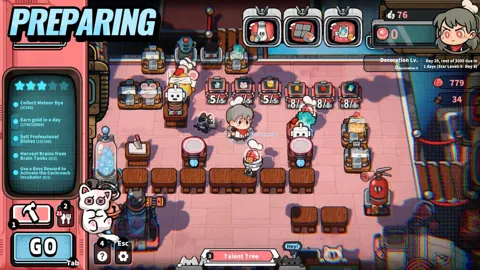 Life, the Universe, and Restaurants Guide: Beginner TipsUse this Life, the Universe, and Restaurants guide to master cooking, train robots, manage Coins, and build toward a five-star restaurant. Start smarter.
More in Guide
See all GuidePopular pages
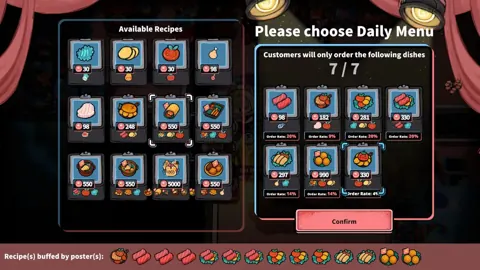
Life, the Universe, and Restaurants Release Date: Guide
Life, the Universe, and Restaurants release date is October 12, 2026. Explore Steam launch details, PC requirements, and tips for your cosmic kitchen.
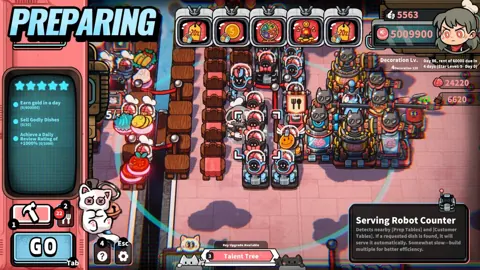
Life, the Universe, and Restaurants Automation Guide
Master Life, the Universe, and Restaurants automation with robot routines, smarter kitchen layouts, coin collection, and menu strategies. Build your crew.
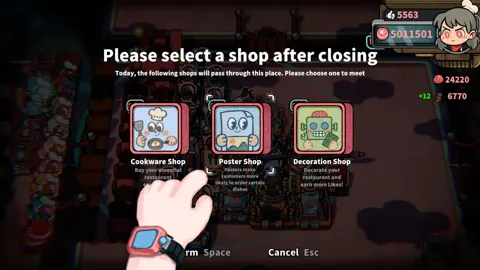
Life, the Universe, and Restaurants Coin Collection Guide
Master Life, the Universe, and Restaurants coin collection with vault routes, transport robots, ad strategies, and practical tips to grow daily income.
Life, the Universe, and Restaurants Demo: Play Guide
Life, the Universe, and Restaurants demo guide: explore kitchen automation, early upgrades, and current Steam options after the October 12, 2026 PC launch.
Join the community
Official channels for news, updates and player help: