
Life, the Universe, and Restaurants Developer and Publisher
Life, the Universe, and Restaurants developer and publisher: Meet GARRY and Gamersky Games, explore robot automation, and get the Windows game on Steam.
Jump to
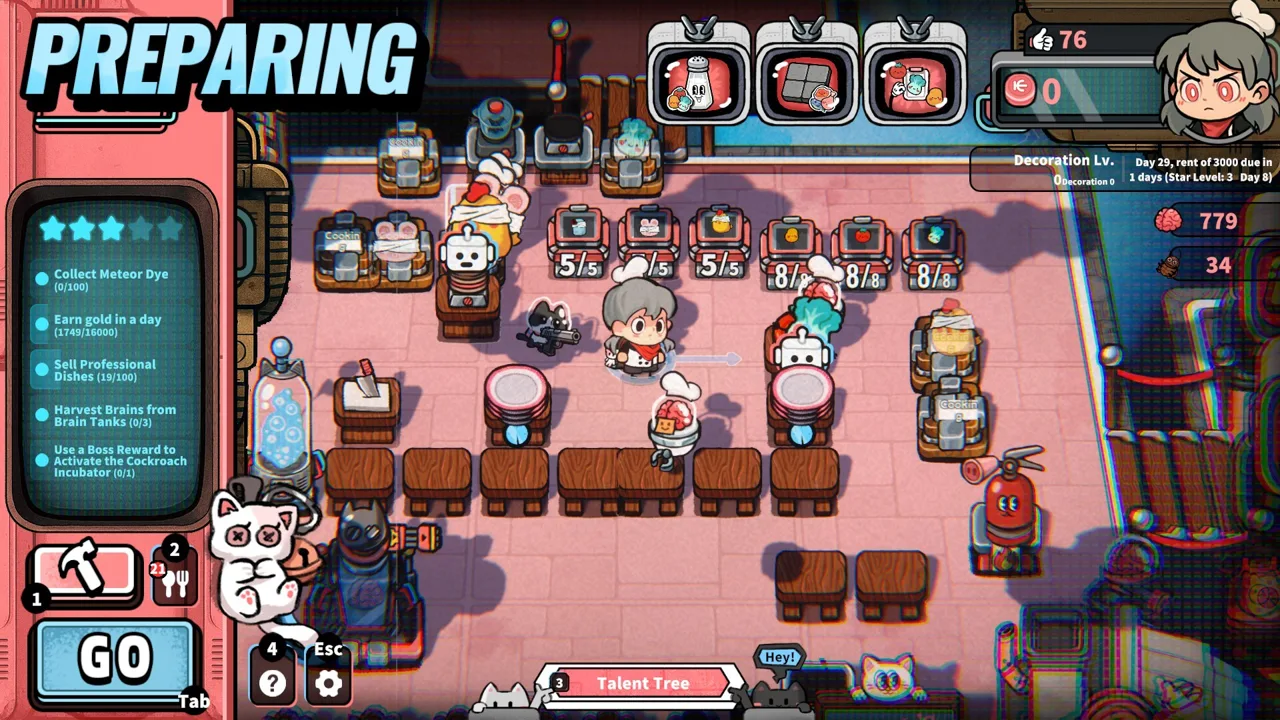
Who Made This Strange Space Restaurant?
Your customers call themselves gods, your kitchen staff run on brains, and the rent still needs paying. The Life, the Universe, and Restaurants developer and publisher are GARRY and Gamersky Games, respectively—the names behind this unusual mix of cooking, restaurant management, and automation. Knowing the Life, the Universe, and Restaurants developer and publisher helps you recognize the people behind the game and find the right place to follow its development.
The full Windows game released on October 12, 2026. Its central challenge is to turn a small space restaurant into a five-star establishment while handling food preparation, customer demands, business decisions, and some deeply questionable staffing solutions.
Here are the Life, the Universe, and Restaurants developer and publisher credits alongside the core release details:
| Detail | Game information |
|---|---|
| Developer | GARRY |
| Publisher | Gamersky Games |
| Release date | October 12, 2026 |
| Platform | Windows PC |
| Store | Steam |
| Player mode | Single-player |
Garry describes the game as a solo development project that took roughly a year and a half to reach release. That gives the restaurant’s peculiar personality some context: its cooking, automation, and dark humor belong to a project built by one developer.
The contrast is hard to miss. You manually prepare meals for cute, demanding customers, then use the brains of enraged guests to expand your robotic workforce. The restaurant’s cheerful appearance sits alongside a business model that turns customer complaints into upgrade materials.
For players, the useful distinction is straightforward: GARRY created the game; Gamersky Games publishes it. Keep those names separate when discussing its design, release, or future announcements.
Understanding GARRY and Gamersky Games’ Roles
The Life, the Universe, and Restaurants developer and publisher credits identify two different roles. GARRY is the developer responsible for creating the game, while Gamersky Games holds the publishing credit.
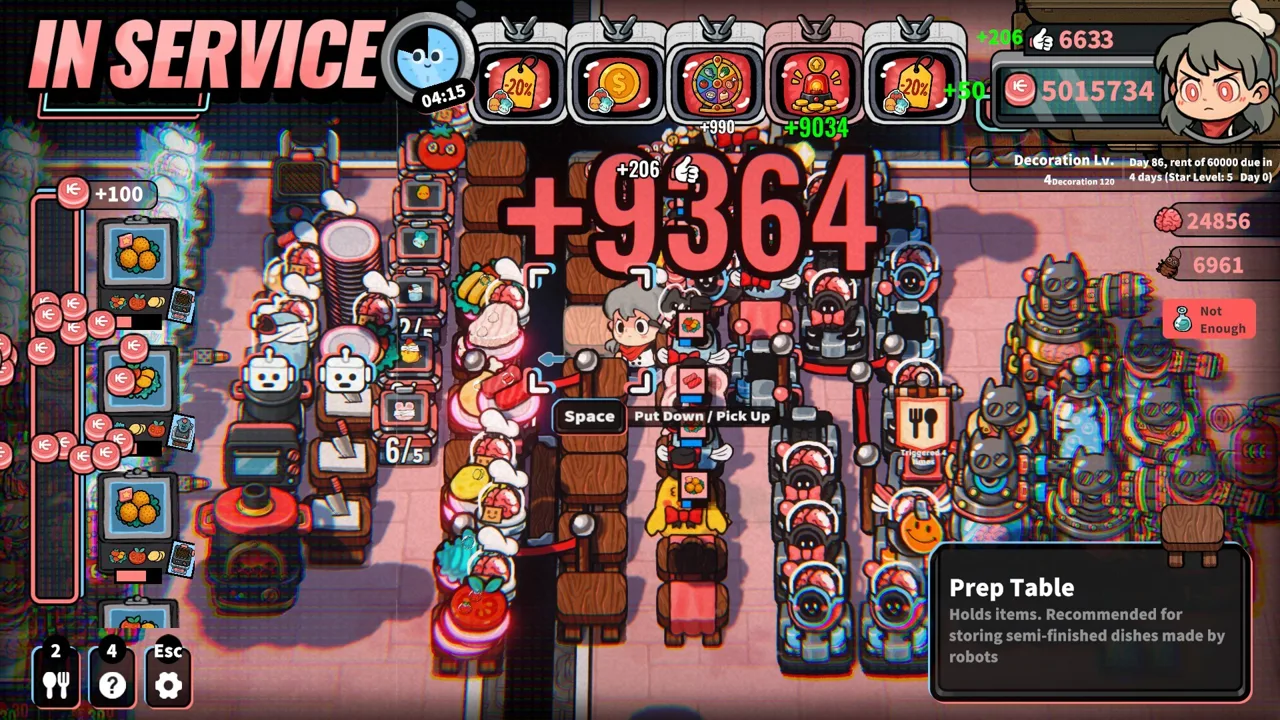 Image: Steam / GARRY
A publishing credit does not make Gamersky Games the creator of the cooking systems, robot routines, or restaurant progression. Likewise, Garry’s solo development statement describes the creation of the game without replacing its separate publisher credit.
That distinction matters when you follow development updates. Garry personally introduced the playtest, invited players to share problems and suggestions, and signed the launch announcement. Those messages establish a direct connection between the developer and the people running his increasingly chaotic space kitchens.
During the playtest, Garry invited players to contact him through the game’s Discord community. The full release announcement also thanked people who wishlisted the game, participated in testing, and offered feedback.
If you want to contribute useful feedback, make it specific:
- Describe the task you were trying to complete.
- Identify whether you were using a controller or keyboard and mouse.
- Explain the sequence that led to the problem.
- Include the recipe, structure, or robot involved when relevant.
“Robot automation feels awkward” leaves several possible causes open. “Recording this recipe becomes difficult at the plating step” gives the developer a much clearer starting point.
Use the same precision when making suggestions. Ask for a particular improvement to restaurant planning, robot recording, or menu navigation, and explain how it would help during service.
What the Full Release Includes
The Life, the Universe, and Restaurants developer and publisher names are useful starting points, but the release content is what matters when you decide to open your own restaurant.
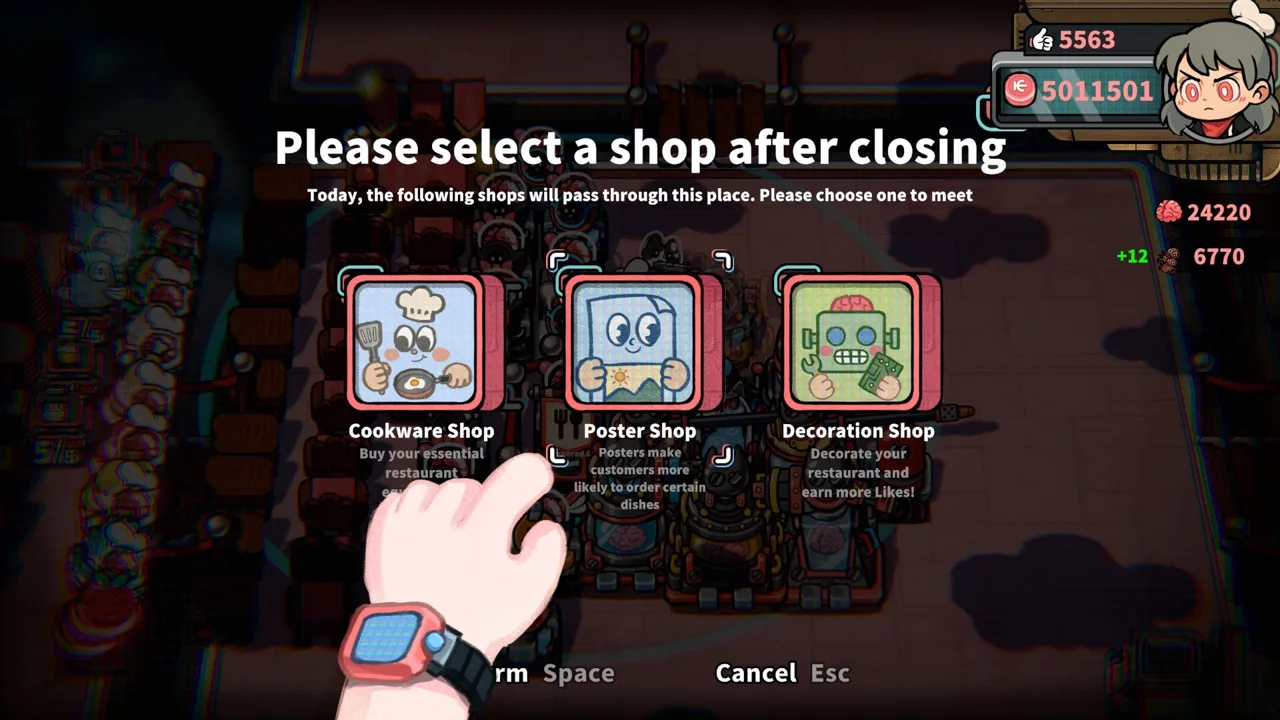 Image: Steam / GARRY
The October 12 launch includes the complete progression toward a five-star restaurant and the ending story. It also expands the available recipes, structures, robots, ads, and talents beyond the earlier testing experience.
| System | Full-game feature | Player action |
|---|---|---|
| Restaurant progression | Complete business objectives from one star through five stars | Check your current objectives before expanding |
| Cooking | Prepare, process, plate, and serve dishes | Arrange stations around the recipes you serve |
| Automation | Record actions for robots to repeat | Build routines around repeated kitchen tasks |
| Business management | Use ads, menus, and talents to shape revenue | Coordinate promotions with production capacity |
| Defense | Handle enraged customers and space roaches | Leave access to areas that need protection |
Cooking begins with direct involvement. You collect ingredients, carry them to the appropriate equipment, prepare the dish, plate it, and deliver it to a customer. More complicated recipes add preparation steps, making kitchen organization increasingly important.
Restaurant growth introduces more than extra seating. Higher star ratings unlock additional purchasable plots, recipes, structures, robots, ads, talents, and management systems. Your layout needs to accommodate the work those additions create.
Expand with a purpose. Leave room for ingredient handling, preparation, plating, and movement between the kitchen and customer tables. Adding equipment without considering access can make an already crowded restaurant harder to manage.
Advertising also affects your plans. Posters encourage customers to order particular dishes, while TVs can steer business toward a selected menu. The game lets you build strategies around prices, order frequency, serving speed, and automation efficiency.
Match your promotions to your kitchen. Before encouraging more orders for a dish, organize the equipment and robot routines needed to produce it.
Then there is the customer patience system. Trash bins, lighting, and other methods can push guests into a rage. Under the game’s fictional self-defense rules, you can kill unruly customers and harvest their brains for talents and more powerful robots.
That makes your restaurant’s environment part of its resource strategy. Serving meals and managing angry guests both feed into the same growing operation.
Build Robot Routines That Solve Real Problems
Beyond the Life, the Universe, and Restaurants developer and publisher credits, robot automation is one of the game’s defining features. You demonstrate a routine, and a robot repeats your recorded actions.
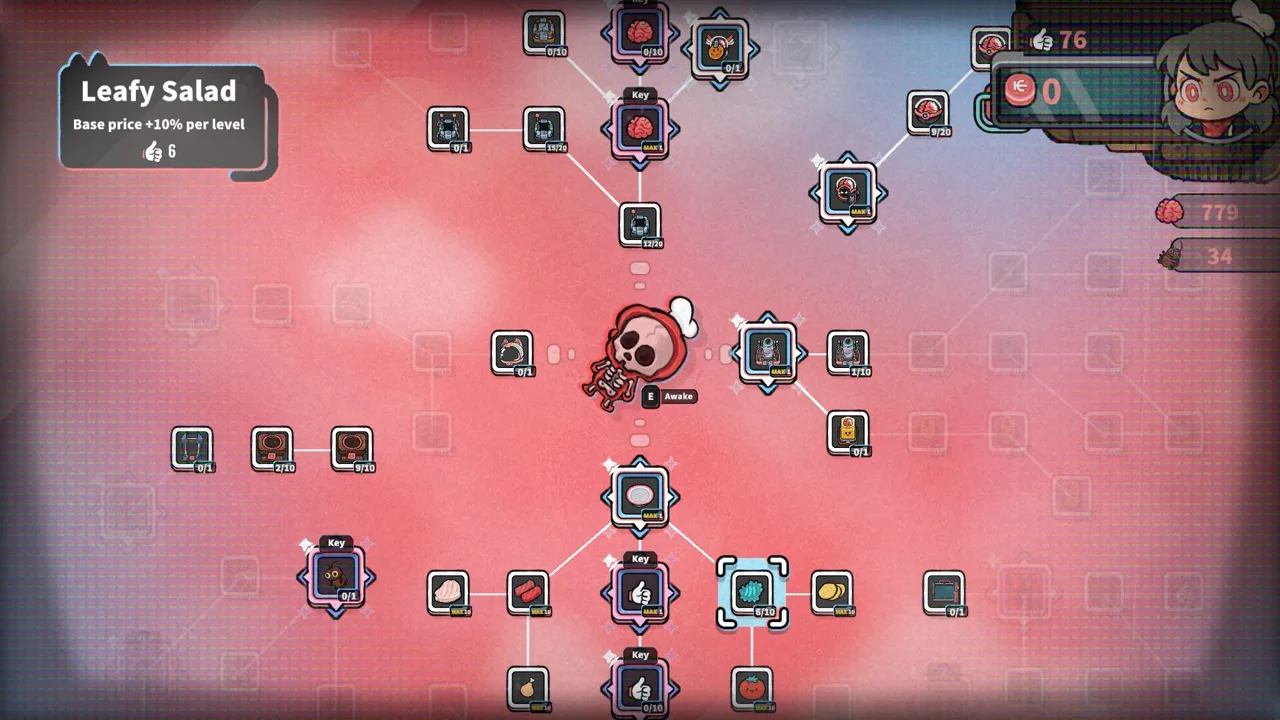 Image: Steam / GARRY
Robots can take orders, cook, serve dishes, transport coins, and clean up. Cooking robots can also work together in sequence, allowing you to divide increasingly complicated recipes across multiple workers.
| Robot task | Work it handles | Planning tip |
|---|---|---|
| Taking orders | Customer order collection | Keep access to customer tables clear |
| Cooking | Repeated preparation routines | Record a route with accessible equipment |
| Serving | Dish delivery | Connect the plating area to customer seating |
| Coin transport | Moving earnings to the vault | Keep the collection route unobstructed |
| Cleaning | Restaurant cleanup | Preserve access to the areas being serviced |
Choose a repeated task before buying into a larger automation plan. If carrying coins constantly pulls you away from cooking, focus on that interruption. If a complicated dish consumes your attention, organize a cooking routine around its preparation.
The value of automation depends on the surrounding layout. A robot still needs usable equipment, room to move, and somewhere to place completed food. Building a routine around tightly packed stations can transfer your kitchen’s congestion to the robot.
Check the entire route before recording. Follow the path from the ingredient container through processing and plating, then consider where the finished dish goes. Keep the sequence understandable enough to adjust when your menu grows.
Shared equipment deserves attention, too. Multiple cooking robots can work in sequence, but assigning several routines to the same preparation station creates another point to manage.
Give each robot a clear job within the larger cooking process. When arranging a production line, consider which worker gathers ingredients, which handles preparation, and which moves food onward.
Coin handling is equally important. Customers drop payment, and coins must reach the vault to become usable earnings. The early kitchen therefore divides your attention between making food and collecting money.
Keep the vault accessible from your seating area. When using transport robots, preserve their route and place their collection coverage around the areas where customers leave coins.
Automation also competes with other uses for brains. Those resources support talent upgrades and more powerful robots, while defense facilities help protect the restaurant.
Identify the problem you want an upgrade to solve before spending. Faster production, coin collection, and defense serve different needs. Connect each purchase to a specific interruption in your current restaurant.
Where to Play and What to Know Before Starting
For the Life, the Universe, and Restaurants developer and publisher, October 12 marks the move from prelaunch testing to the full Windows release. For you, it means access to the complete five-star progression and ending story.
Visit the Life, the Universe, and Restaurants Steam page to buy the full game and check its current purchase options.
Older previews discuss a demo and playtest. Keep those earlier builds separate from the released game when reading about features or troubleshooting. The current destination for playing is the full game’s Steam page.
| PC or control detail | Supported specification |
|---|---|
| Operating system | Windows 10 or 11, 64-bit |
| Minimum processor | Intel Core i5-6xxx or AMD FX-6300 |
| Minimum memory | 8 GB RAM |
| Minimum graphics | NVIDIA GeForce GTX 750 or AMD Radeon R7 265 |
| Available storage | 1 GB |
| Controller support | Full controller support; gamepad recommended |
| Keyboard option | Keyboard-only play supported |
The game is single-player. Its frantic cooking loop may remind you of cooperative kitchen games, but here you manage the restaurant yourself and delegate work to robots.
English is supported, alongside Simplified Chinese, Japanese, Korean, Traditional Chinese, French, Brazilian Portuguese, and European Portuguese. Simplified Chinese has full audio support.
Choose your preferred controls before tackling a busy service. Controller play is recommended, while the keyboard-only option provides another supported way to run the restaurant.
Earlier testing included feedback about controller navigation in the ad upgrade interface, saving and exiting, and the time available for recording complicated cooking routines. Those concerns belong to the testing period. At launch, player reactions included praise for controller support alongside complaints about crowded layouts, slow robots, and cumbersome recording.
Use that context to focus your own feedback on the current game. Name the exact screen or action causing trouble, especially if the issue involves deploying equipment or teaching a robot.
The restaurant offers plenty to organize: recipes, staff, advertising, customer patience, defenses, and expansion. Build around your current objectives, keep routes accessible, and let each new robot take over a clearly defined job. That gives your growing kitchen a plan instead of another appliance to squeeze into the corner.
FAQ
Who are the Life, the Universe, and Restaurants developer and publisher?
The developer is GARRY, and the publisher is Gamersky Games. Garry describes the game as a solo project developed over roughly a year and a half.
When did the full game release?
Life, the Universe, and Restaurants released on October 12, 2026, for Windows PC through Steam. The full version includes complete five-star restaurant progression, the ending story, and expanded recipes, structures, robots, ads, and talents.
Is Life, the Universe, and Restaurants multiplayer?
It is a single-player game. You personally manage cooking and service, then use robots to automate tasks such as taking orders, preparing meals, delivering dishes, collecting coins, and cleaning.
How do cooking robots learn their tasks?
Cooking robots repeat actions you record. Demonstrate the preparation routine you want them to perform, and arrange multiple robots in sequence to build more complex production lines. Keep equipment and routes accessible when planning those routines.
Continue with
 Life, the Universe, and Restaurants Discord: Join GuideJoin the Life, the Universe, and Restaurants discord community to ask gameplay questions, share robot setups, and send useful bug reports to the developer.
More in Community
Life, the Universe, and Restaurants Reporting Issues: Help
Life, the Universe, and Restaurants reporting issues guide: learn where to send bugs, what details to include, and how to explain control or robot trouble.
Life, the Universe, and Restaurants Trailer and Screenshots
Explore Life, the Universe, and Restaurants trailer and screenshots, from hands-on cooking to robot automation. Plan your space restaurant before you play.
Join the community
Official channels for news, updates and player help: