
Coming soon · Release date: October 12, 2026 Steam store ↗
UpdatedLife, the Universe, and Restaurants FAQ: Launch Guide
Life, the Universe, and Restaurants FAQ covers the October 12 release date, PC specs, robot cooking, and restaurant upgrades. Plan your cosmic kitchen.
Jump to
Release Date, Platforms, and Demo
Your next dinner rush could involve robot cooks, demanding gods, and a customer meltdown that turns into a valuable resource. This Life, the Universe, and Restaurants FAQ helps you prepare for a restaurant simulation where kitchen efficiency and business decisions shape your operation. Use this Life, the Universe, and Restaurants FAQ to check the planned launch, PC requirements, and gameplay systems before opening your cosmic kitchen.
Life, the Universe, and Restaurants is scheduled to release on October 12, 2026. As of October 9, its Steam listing still marks it as coming soon. Treat that date as the announced schedule rather than evidence that the game is already available.
Here are the essential launch details:
| Detail | Listed information |
|---|---|
| Scheduled release | October 12, 2026 |
| Developer | GARRY |
| Publisher | Gamersky Games |
| Supported platform | Windows |
| Player mode | Single-player |
| Genres | Casual, Indie, Simulation, Strategy |
| Demo | A Steam demo is listed under App ID 4311130 |
The premise starts with hands-on restaurant work. You collect ingredients, prepare dishes, plate meals, and deliver orders to customers. As the business grows, you can deploy robots to repeat cooking routines and handle other restaurant tasks.
That combination gives you several problems to solve: how to produce meals efficiently, where to place facilities, which dishes to promote, and how to handle customers who become hostile.
A demo is listed, but its content, duration, and availability window are not specified here. Visit the Life, the Universe, and Restaurants Steam store page to check the current download options and release status.
For launch planning, the key takeaway from this Life, the Universe, and Restaurants FAQ is straightforward: Windows is the listed platform, and October 12 is the scheduled release date. Mac, Linux, and console versions are not confirmed by these launch details.
PC Requirements, Controls, and Language Support
Before planning an elaborate robot kitchen, check whether your PC meets the listed minimum requirements. The game specifies Windows 10 or Windows 11 in a 64-bit version, along with 8 GB of RAM and 1 GB of available storage.
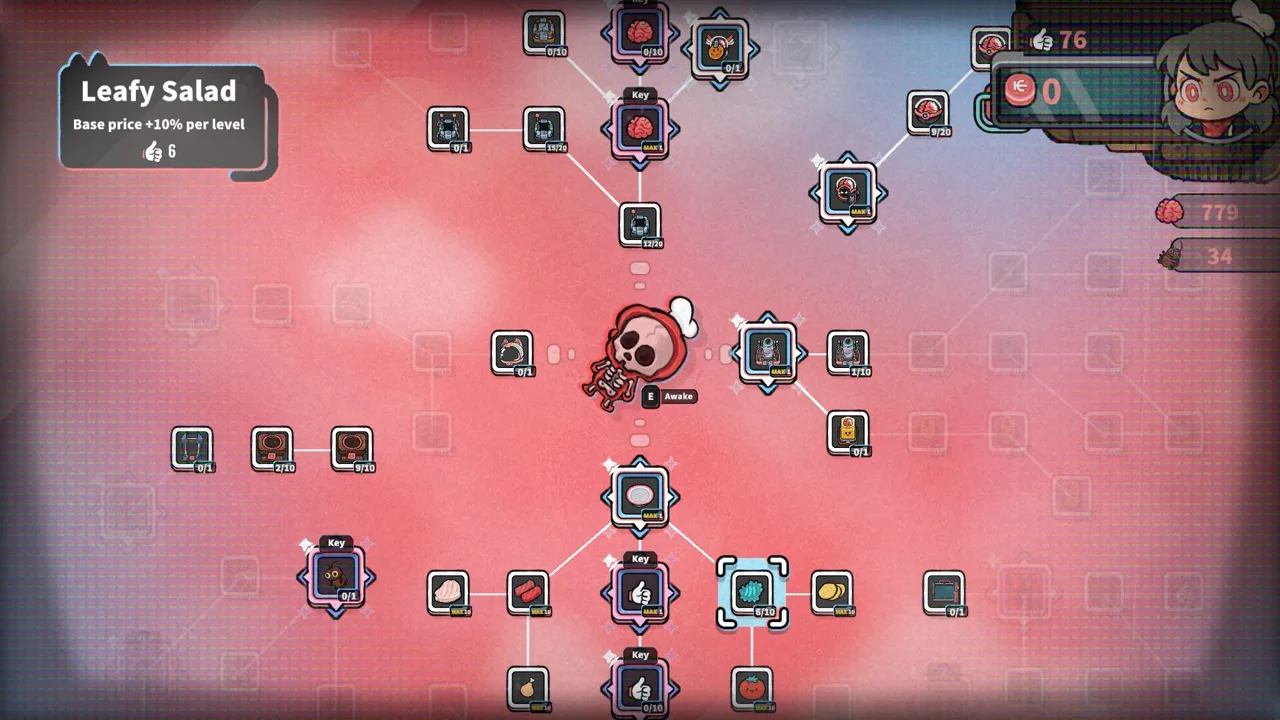 Image: Steam / GARRY
| Component | Minimum requirement |
|---|---|
| Operating system | Windows 10 or 11, 64-bit |
| Processor | Intel Core i5-6xxx or AMD FX-6300 |
| Memory | 8 GB RAM |
| Graphics | NVIDIA GeForce GTX 750 or AMD Radeon R7 265 |
| Storage | 1 GB available space |
These are minimum specifications, not a promise of any particular frame rate, resolution, or graphics preset. Recommended hardware requirements are not included in the listed details.
A sensible preparation step is to compare your processor, graphics card, and memory against the table before launch. Storage is only one part of compatibility; meeting the space requirement does not establish that the rest of your hardware is suitable.
Can you use a controller or keyboard?
Steam lists full controller support and marks a gamepad as recommended. It also lists a keyboard-only option, giving you another control method to consider.
The game carries a “Playable without Timed Input” feature label. That is useful information for players who prefer to avoid timed button inputs, although it does not mean restaurant management has no pressure. The gameplay description still emphasizes growing order volume and keeping service moving.
Steam Cloud, Steam Leaderboards, and Family Sharing are also listed. Specific leaderboard categories and detailed save behavior are not described.
Is English supported?
Yes. The listed languages are English, Simplified Chinese, Japanese, Korean, Traditional Chinese, French, Brazilian Portuguese, and European Portuguese.
Simplified Chinese is the only language marked with full audio support. English is supported, but full English audio is not listed.
This Life, the Universe, and Restaurants FAQ distinguishes those language details because English support and English voice acting are separate features.
How Cooking and Robot Automation Work
The restaurant begins with manual food preparation. You gather ingredients, process them, assemble each dish, and serve customers while moving between the kitchen and dining area.
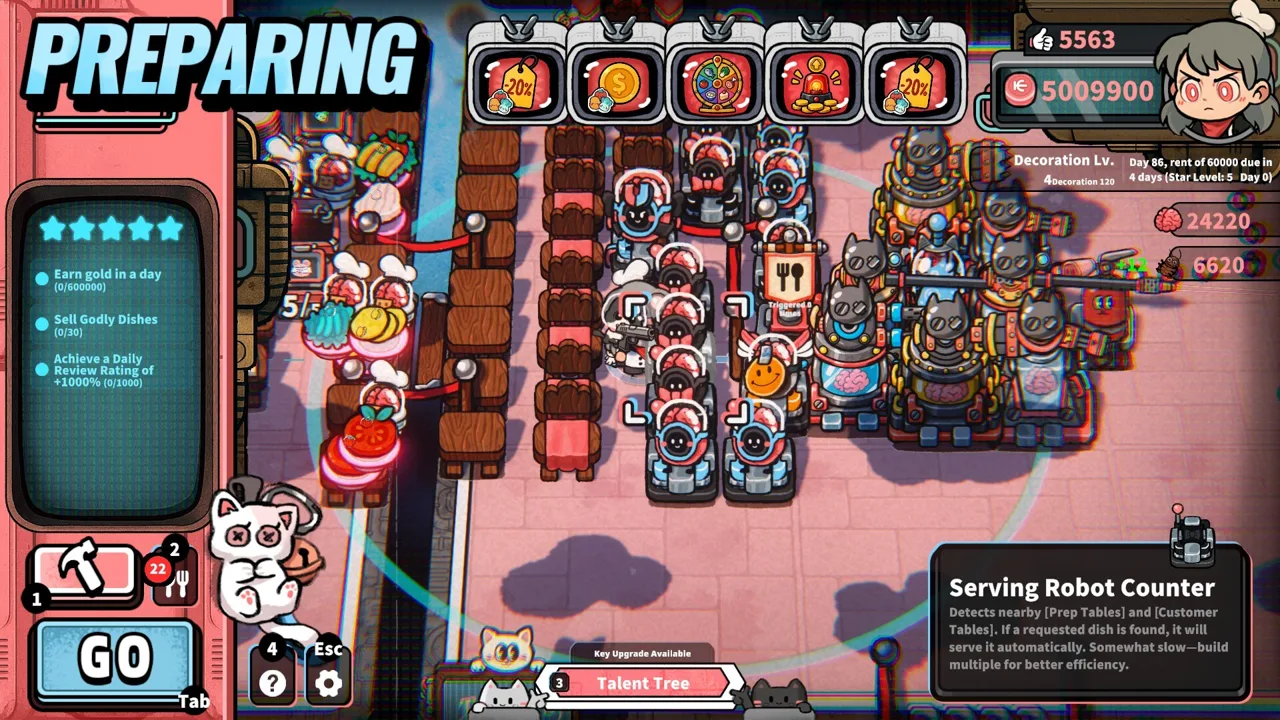 Image: Steam / GARRY
Robots let you turn that work into repeatable routines. You record a cooking sequence, and your robots reproduce it. More advanced recipes involve additional preparation steps, with multiple Cooking Robots able to work together in sequence.
| Restaurant task | Described robot capability |
|---|---|
| Taking orders | Robots can handle customer orders |
| Cooking | Robots can repeat recorded cooking routines |
| Serving | Robots can deliver prepared dishes |
| Moving money | Robots can transport Coins |
| Cleaning | Robots can perform cleanup work |
| Complex preparation | Multiple Cooking Robots can work in sequence |
The practical question is how those tasks connect. A kitchen can prepare food while another part of the restaurant struggles to serve it or clear the work that follows.
A good approach is to think through the complete route of an order: customer request, ingredient preparation, cooking, plating, delivery, and cleanup. This follows the described restaurant workflow without assuming a particular optimal layout.
What should you automate?
The game supports automation across several jobs, so consider the task that is limiting your current operation. If manual cooking occupies your attention, a recorded cooking routine is a logical place to focus. If completed meals are waiting to reach tables, serving deserves attention instead.
Those are planning suggestions, not tested build recommendations. The exact balance will depend on your restaurant and the recipes you use.
Before recording a routine, a useful habit is to consider whether its movements are unnecessarily long. Robots repeat what you record, so a clear sequence gives you a more deliberate foundation for automation.
As recipes become more complex, think of the kitchen as connected preparation stages. Multiple Cooking Robots working in sequence allow you to divide that process rather than treating every dish as one isolated job.
The central automation lesson in this Life, the Universe, and Restaurants FAQ is to coordinate cooking with service. Producing more meals is only one part of running the restaurant.
Restaurant Stars, Expansion, and Profits
Your progression goal is to complete business objectives and raise the restaurant from 1 Star to 5 Stars. Each stage has objectives associated with upgrading, so expansion should support those goals.
 Image: Steam / GARRY
You earn Coins, unlock recipes, buy cookware, acquire additional plots, add Customer Tables, and expand production facilities. Robot staff also become part of your growing operation.
Higher Star Ratings unlock more purchasable plots and access to additional recipes, structures, robots, advertisements, talents, and management systems. The exact objective requirements and purchase costs are not specified, so there is no supported shortcut checklist for reaching 5 Stars.
How should you plan an expansion?
A useful approach is to assess seating and production together. Additional tables create room for customers, while kitchen facilities and robot staff support the work needed to serve them.
Before committing to a larger dining area, consider whether your current preparation and delivery setup can handle more orders. Likewise, adding production facilities is more purposeful when you know which part of the cooking process needs capacity.
Layout matters because the game explicitly includes traffic flow and production optimization. When reviewing your restaurant, consider the paths connecting ingredients, cookware, preparation areas, and Customer Tables.
No specific layout is established as universally superior. Treat expansion as a response to your current workflow and Star Upgrade objectives.
How do ads and menu strategies affect business?
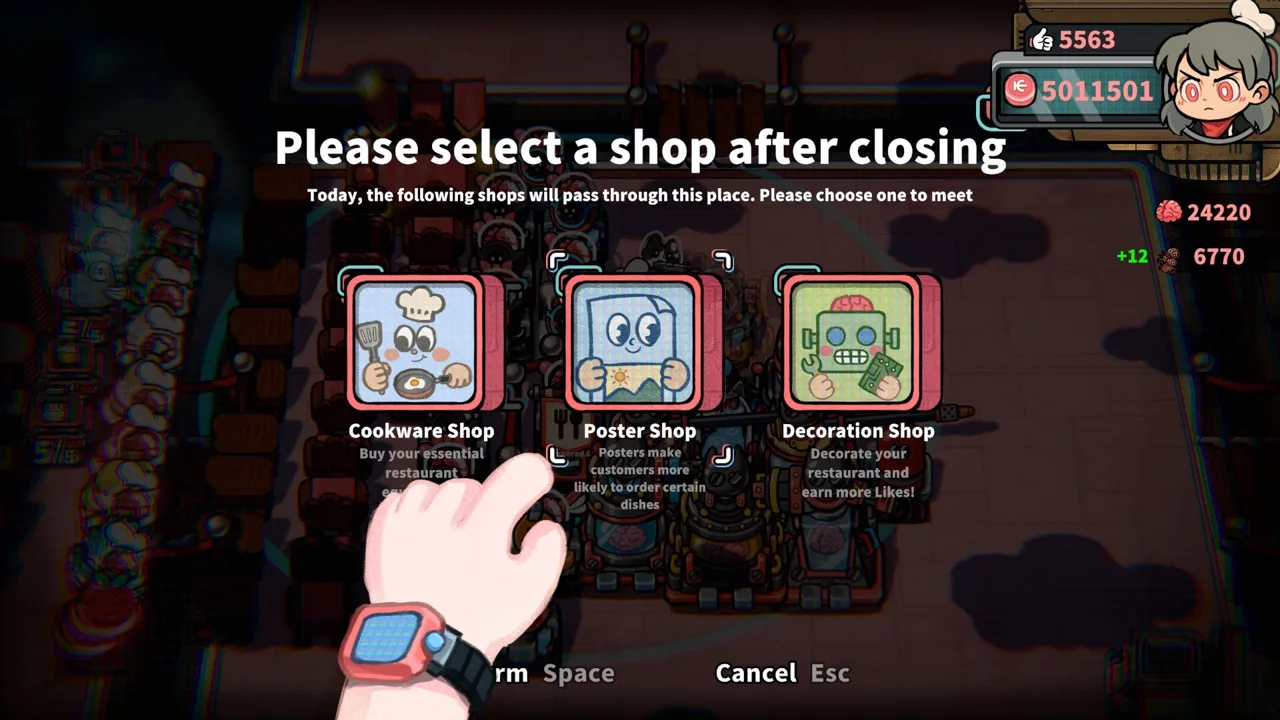
Advertising influences what customers order and can improve profits from particular dishes. Posters encourage orders for selected dishes, while TVs help direct customers toward a chosen menu.
The game also describes business strategies built around:
- Dish prices and order rates.
- Serving speed and automation efficiency.
- Repeated promotion of one dish or a rotating menu.
- Specialization in Veggie Dishes or Meat Dishes.
- Pricing opportunities tied to queue length, Coin balance, or special events.
A reasonable strategy is to align promotion with production. If you encourage customers to order a particular dish, consider whether its preparation routine and serving process can accommodate that demand.
This Life, the Universe, and Restaurants FAQ cannot establish a highest-profit recipe or an ideal advertising setup. What the described systems do offer is room to connect menu choices, kitchen capacity, and pricing into your own business plan.
Angry Gods, Brains, and Restaurant Defense
Your customers call themselves “gods,” and their patience introduces a darker management system. Trash Bins, lighting, and other methods can reduce patience until customers become enraged.
Within the game's fictional rules, the Cosmic Regulatory Bureau permits killing unruly customers under its self-defense provisions. Their Brains then become a resource for talent upgrades and more powerful brain-based robots.
Coins and Brains therefore support different parts of your operation:
| Resource | Described acquisition | Described uses |
|---|---|---|
| Coins | Restaurant business earnings | Cookware, plots, and restaurant expansion purchases |
| Brains | Harvested from unruly customers | Talent upgrades and unlocking more powerful brain-based robots |
This creates a management decision beyond ordinary customer satisfaction. Serving food supports the business, while provoking hostile behavior can lead to a resource used for other upgrades.
That does not establish an ideal farming method or a guaranteed safe setup. The available details do not specify patience thresholds, damage values, Brain yields, or the full consequences of an attack.
What defense options are available?
The described options include Turret Robots, Guards, and other Defense Facilities. These protect the restaurant as you develop its defensive side.
A cautious planning tip is to consider protection before intentionally encouraging customers to lose patience. The game connects anger with hostile behavior, so treating provocation as an isolated decoration choice would overlook its role in restaurant defense.
As you expand, think about how defensive facilities fit alongside dining space and kitchen traffic. Exact placement recommendations would require information about ranges and enemy behavior that is not provided.
The unusual resource loop is a defining feature of this Life, the Universe, and Restaurants FAQ: cooking, automation, customer patience, and defense all belong to the same restaurant operation. Your business plan needs to account for more than what goes on the menu.
FAQ
When does Life, the Universe, and Restaurants release?
The scheduled Steam release date is October 12, 2026. As of October 9, the game remains listed as coming soon. This Life, the Universe, and Restaurants FAQ reflects that prelaunch status; a specific launch time is not provided.
Is Life, the Universe, and Restaurants multiplayer?
The Steam listing identifies the game as single-player. Co-op and competitive multiplayer are not listed. Steam Leaderboards are included as a separate feature, but that does not establish a multiplayer mode.
Is there a demo, and can I play on Mac or Linux?
A Steam demo is listed under App ID 4311130, although its scope and availability window are not specified. Windows is the supported platform in the launch details. Native Mac and Linux support are not listed.
What is the main objective, and why do Brains matter?
Your main progression goal is to complete business objectives and upgrade your restaurant from 1 Star to 5 Stars. Brains harvested from unruly customers serve a different purpose from restaurant earnings: they upgrade talents and unlock more powerful brain-based robots.
Continue with
 Life, the Universe, and Restaurants platforms and wishlistLife, the Universe, and Restaurants platforms and wishlist guide: check Windows support, the October 12 release date, PC requirements, and Steam options.
More in Release
Life, the Universe, and Restaurants demo: Steam Guide
Explore Life, the Universe, and Restaurants demo, check Steam details and PC requirements, and learn what to look for in its cosmic restaurant gameplay.
Life, the Universe, and Restaurants developer and publisher
Life, the Universe, and Restaurants developer and publisher details: meet GARRY and Gamersky Games, explore gameplay, and check the planned Steam release.
Life, the Universe, and Restaurants release date countdown
Life, the Universe, and Restaurants release date countdown: track the October 12 Steam launch, check PC requirements, and plan your cosmic kitchen debut.
Life, the Universe, and Restaurants system requirements
Life, the Universe, and Restaurants system requirements explained: check minimum PC specs, Windows support, storage needs, and demo details before you buy.
Join the community
Official channels for news, updates and player help: